
First-Time DUI vs Repeat Offense: Key Differences
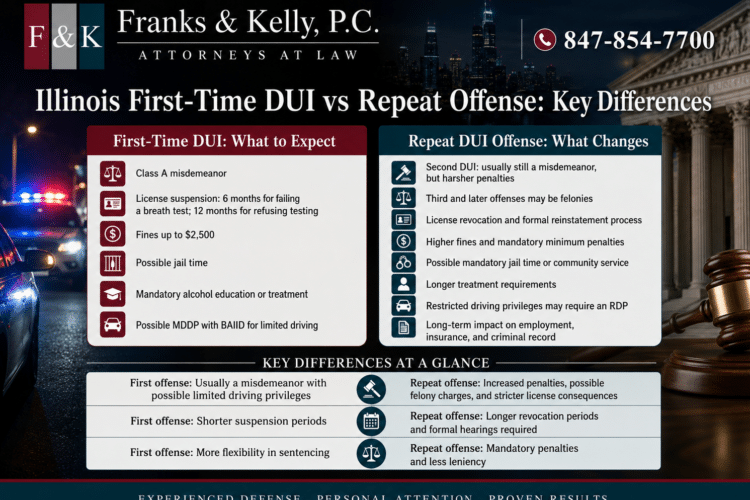
A DUI charge is serious, but the consequences increase significantly if it’s not your first offense. Understanding the differences between a first-time DUI and a repeat offense in Illinois can help you better prepare and protect your future.
Why the Difference Matters
Illinois law treats repeat DUI offenses much more harshly than first-time offenses. Penalties escalate quickly, affecting your driving privileges, finances, and even your freedom.
First-Time DUI: What to Expect
- Criminal Classification
A first-time DUI is typically charged as a Class A misdemeanor. - License Suspension
You may face a statutory summary suspension, often lasting:- 6 months for failing a breath test
- 12 months for refusing testing
- Possible Penalties
- Fines up to $2,500
- Potential jail time (though not always imposed for first offenses)
- Mandatory alcohol education or treatment
- Driving Relief Options
Many first-time offenders may qualify for a Monitoring Device Driving Permit (MDDP), allowing limited driving with a breath alcohol ignition interlock device (BAIID).
Repeat DUI Offense: What Changes
- Harsher Criminal Charges
A second DUI is still typically a misdemeanor but carries stricter penalties. Third and subsequent offenses can be charged as felonies. - Longer License Revocation
Repeat offenses often result in license revocation rather than suspension, meaning you must go through a formal reinstatement process. - Increased Penalties
- Higher fines and mandatory minimum penalties
- Mandatory jail time or community service in some cases
- Longer required treatment programs
- Limited Driving Privileges
Obtaining driving privileges becomes more difficult and may require a Restricted Driving Permit (RDP) and strict monitoring. - Long-Term Consequences
Repeat offenses can have lasting effects on employment, insurance rates, and your criminal record.
Key Differences at a Glance
- First offense: Usually a misdemeanor with possible limited driving privileges
- Repeat offense: Increased penalties, possible felony charges, and stricter license consequences
- First offense: Shorter suspension periods
- Repeat offense: Longer revocation periods and formal hearings required
- First offense: More flexibility in sentencing
- Repeat offense: Mandatory penalties and less leniency
Why Legal Representation Is Critical
Whether it’s your first DUI or a repeat offense, having an experienced attorney can make a significant difference. The stakes are higher with repeat offenses, and a strong legal strategy is essential to protect your rights and minimize penalties.
Final Thoughts
A first-time DUI is serious, but repeat offenses carry far greater consequences. Understanding these differences can help you take the right steps and avoid long-term damage to your record and your future.
At Franks and Kelly P.C., we provide aggressive, experienced representation for DUI cases in McHenry County. Whether you’re facing your first charge or a repeat offense, we’re here to help you navigate the process and work toward the best possible outcome.