
What Illinois’s New E-Bike Law Means For Riders, Parents, And Drivers In 2027
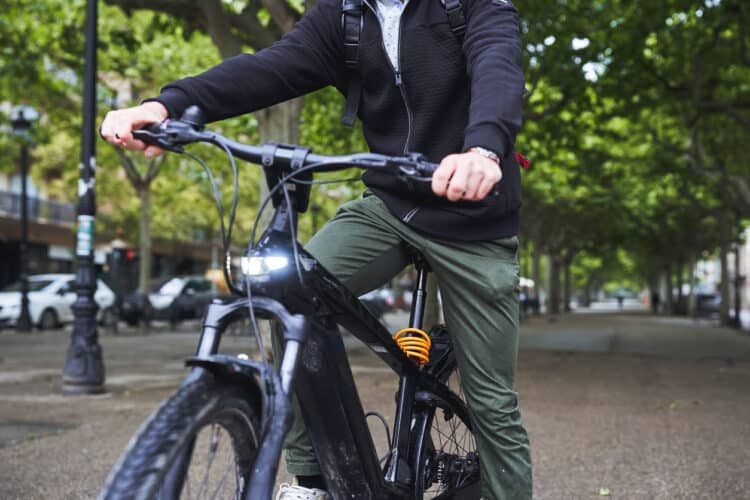
Electric bicycles, e-motos, scooters, and other electric transportation devices have become increasingly popular and common on Illinois roads, bike paths, and residential streets. Their growing popularity has also raised difficult questions about where these devices may be operated, how old a rider must be, and when an electric bike should legally be treated more like a motorcycle than a bicycle.
Those questions are especially relevant in McHenry County and neighboring Lake County, where several serious crashes involving young riders have recently occurred. Illinois has now responded with Public Act 104-0854, a new statewide micro-mobility law that takes effect on January 1, 2027. We believe riders, parents, and motorists should understand these changes because a device’s speed, power, classification, and location of operation may affect both traffic-law consequences and responsibility after a collision.
Illinois Will Keep The Three Existing E-Bike Classes
Illinois already recognizes three categories of low-speed electric bicycles. Under 625 ILCS 5/1-140.10, a low-speed electric bicycle has operable pedals and an electric motor of less than 750 watts. Class 1 bicycles provide assistance while the rider pedals and stop providing assistance at 20 miles per hour. Class 2 bicycles may propel themselves without pedaling but also stop providing assistance at 20 miles per hour. Class 3 bicycles provide pedal assistance up to 28 miles per hour.
Public Act 104-0854 keeps this basic three-class structure while imposing additional rules concerning age and higher-powered devices. This distinction matters because some products marketed as e-bikes can reach speeds far beyond 28 miles per hour. A device capable of 40, 50, or even 70 miles per hour presents significantly different legal and safety issues from a conventional pedal-assisted bicycle.
What Changes On January 1, 2027?
According to the Illinois Secretary of State, riders of e-bikes and e-motos capable of traveling more than 28 miles per hour will be required to have a driver’s license, title, registration, and insurance beginning January 1, 2027. The law also restricts electric micro-mobility devices such as e-scooters, electric skateboards, and electric unicycles from operating above 28 miles per hour on public roads, bike lanes, and bike paths. E-bikes and covered micro-mobility devices will also be prohibited from sidewalks.
The law establishes statewide minimum ages as well. A rider must generally be at least 15 years old to operate a Class 1 or Class 2 e-bike and at least 16 years old to operate a Class 3 e-bike or another covered electric micro-mobility device.
These requirements are significant for families purchasing electric bikes for teenagers. Parents should not assume that a product sold as an “e-bike” is legally treated as an ordinary bicycle. Motor wattage, maximum speed, pedals, and other characteristics can determine how Illinois law classifies the device.
Recent Crashes Show Why Classification Matters
The new law follows several serious Illinois crashes involving electric bikes, dirt bikes, and similar devices.
In July 2026, a 14-year-old male riding an electric dirt bike was killed in a collision with an SUV in Wauconda. That same month, two 15-year-old females riding an e-bike were struck by an SUV in Libertyville, leaving one critically injured. In June, a 17-year-old male riding a dirt bike was killed in a collision with a vehicle in Joliet.
These incidents do not mean an e-bike rider is automatically responsible for a collision simply
because the rider is young or because the vehicle is electrically powered. Liability depends on the facts surrounding the particular crash. However, the classification of the vehicle and whether it was lawfully being operated can become important evidence when police, insurers, attorneys, and courts evaluate what occurred.
E-Bike Riders Have Traffic-Law Responsibilities
Illinois law already gives bicycle riders important rights while imposing corresponding responsibilities. Under 625 ILCS 5/11-1502, a person riding a bicycle on a highway generally receives the rights and assumes the duties applicable to a vehicle driver, subject to bicycle-specific rules and provisions that cannot reasonably apply to bicycles.
Current Illinois law also provides specific requirements for low-speed electric bicycles under 625 ILCS 5/11-1517. For example, low-speed electric bicycles may generally be operated on streets and roadways where bicycles are authorized, including bicycle lanes. Current law permits use on bicycle paths unless the municipality, county, or other authority prohibits a particular class of e-bike, while operation on sidewalks is prohibited. Class 3 riders must currently be at least 16 years old.
Because the new statute does not become effective until January 1, 2027, anyone evaluating conduct occurring during 2026 must distinguish between the law presently in force and the requirements that will apply beginning next year.
High-Speed Devices Will Carry Greater Legal Responsibilities
One major purpose of Public Act 104-0854 is to distinguish conventional low-speed electric bicycles from machines whose power and speed make them function more like motorcycles.
The enrolled legislation creates and modifies several Illinois Vehicle Code provisions governing electric micro-mobility devices, high-speed scooters, motor-driven cycles, licensing, registration, titling, and insurance. Illinois mandatory insurance law, 625 ILCS 5/7-601, generally requires a motor vehicle designed for use on public highways to be covered by liability insurance unless an exemption applies.
For a family purchasing an electric bike or e-moto, checking the manufacturer’s specifications is, therefore, important. A vehicle capable of exceeding 28 mph should not be evaluated solely by how it looks or how a retailer describes it.
What Parents And Riders Should Do Before 2027
Families should identify exactly what type of electric device they own rather than relying on its appearance. The manufacturer’s label, motor wattage, maximum assisted speed, throttle configuration, and pedal system may determine whether the vehicle qualifies as a Class 1, Class 2, or Class 3 e-bike, or falls into a different legal category.
The Illinois Secretary of State has announced a statewide education campaign addressing the new rules, including updated driver-education information and guidance for law enforcement, schools, municipalities, parents, and riders. Anyone operating these devices in McHenry County, Lake County, or Kane County should also remain aware that local restrictions may still matter where state law permits local governmental regulation.
Speak With Our Lake In The Hills Attorneys Today
The rapidly changing laws governing e-bikes, e-motos, scooters, and other electric transportation devices can affect traffic citations and accident investigations. At Franks & Kelly P.C., Attorneys at Law, we work closely with clients so they can understand the Illinois laws applicable to their circumstances, evaluate their legal options, and make informed decisions throughout the legal process.
David Franks has received Super Lawyers recognition in Criminal Defense since 2023, is rated “AV Preeminent” by Martindale-Hubbell, and has achieved a 10.0 Avvo rating. Our Firm is known locally for providing tailored legal services for complex legal matters.
Our involvement in the Illinois legal community also includes service within the Illinois State Bar Association, in which Attorney David Franks was appointed for 2026-2027 to the ISBA General Assembly, Criminal Justice Section Council, and Traffic Laws and Courts Section Council.
If an e-bike, electric motorcycle, scooter, or other micro-mobility issue has resulted in a citation, accident, injury, or other legal concern, contact Franks & Kelly P.C., Attorneys at Law, to schedule a free, confidential consultation. Contact Franks & Kelly, P.C., Attorneys at Law, by dialing 847-854-7700 to schedule a confidential consultation.