
Illinois House Bill 4948 Intelligent Speed Assistance Program: What Illinois Drivers Should Know
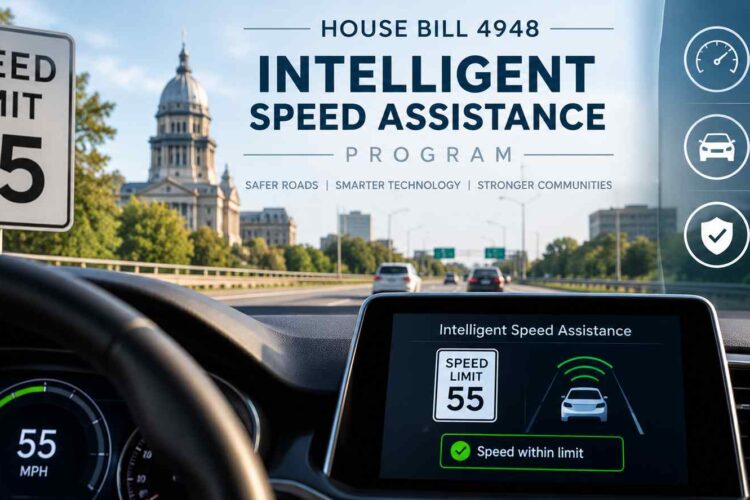
Illinois has enacted a significant new law aimed at drivers with repeated convictions for extreme speeding. House Bill 4948 was signed into law on June 26, 2026, as Public Act 104-0507, and will establish the Illinois Intelligent Speed Assistance Program beginning January 1, 2028. The law does not apply to every speeding ticket or even every driver convicted of aggravated speeding. Instead, it targets drivers who accumulate multiple qualifying aggravated speeding convictions within a relatively short period.
For drivers in McHenry County, Lake County, Kane County, and throughout Illinois, the consequences can extend well beyond the fines and criminal penalties imposed for the underlying speeding cases. We believe it is important for motorists to understand how the new program works because decisions made when defending an aggravated speeding charge may eventually affect a driver’s ability to retain driving privileges.
House Bill 4948 Is Now Illinois Public Act 104-0507
Although the legislation is commonly referred to as House Bill 4948, it became Public Act 104-0507 after being signed into law. The Act adds Section 6-206.3 to the Illinois Vehicle Code, 625 ILCS 5/6-206.3, establishing the Intelligent Speed Assistance Program under the administration of the Illinois Secretary of State. The new law takes effect January 1, 2028.
The Program is designed specifically for repeat aggravated speeding offenders. Under 625 ILCS 5/6-206.3, a “qualifying offense” is a conviction under 625 ILCS 5/11-601.5 for driving at least 26 miles per hour over the applicable speed limit, or a similar conviction from another jurisdiction. Two qualifying convictions occurring within a 12-month period can trigger the new licensing consequences.
That distinction is important. A routine speeding citation does not automatically place someone in the Intelligent Speed Assistance Program. The statute focuses on the more serious misdemeanor form of aggravated speeding already recognized under Illinois law.
How Illinois Law Treats Aggravated Speeding
Section 11-601.5 of the Illinois Vehicle Code currently divides aggravated speeding into two Misdemeanor categories. Driving 26 to 34 miles-per-hour over the applicable speed limit is a Class B misdemeanor. Driving 35 miles-per-hour or more over the limit is a Class A Misdemeanor. 625 ILCS 5/11-601.5.
These are criminal offenses rather than ordinary petty traffic violations. Public Act 104-0507 adds another potential consequence for repeat convictions by connecting those convictions to the driver’s license record.
Once the new law becomes effective, we will need to consider not only the immediate outcome of an aggravated speeding prosecution, but also whether a conviction could become the first or second qualifying offense within the statutory 12-month period.
What Happens After Two Qualifying Speeding Convictions?
Under 625 ILCS 5/6-206.3, the Secretary of State must suspend the driver’s license or driving privileges of a driver who commits two qualifying offenses within twelve (12 months). For a first suspension under the program, the statute provides for a twelve (12)-month suspension. However, the driver may enroll in the Intelligent Speed Assistance Program and, after successfully driving on an Intelligent Speed Assistance Permit for Six (6) months without a Program violation, terminate the suspension.
A second suspension under the Program requires successful participation for twelve (12) months. A third or subsequent suspension requires twenty-four (24) months of successful participation.
These provisions create a strong incentive to take an aggravated speeding charge seriously before a conviction occurs. When we review a speeding case, we can examine the alleged speed, the method used to measure it, the circumstances of the stop, the driver’s record, and the available options for resolving the charge.
What Does An Intelligent Speed Assistance Device Do?
The statute defines an active intelligent speed assistance device as an aftermarket system that determines the applicable speed limit and actively prevents the vehicle from exceeding that limit. The technology may rely on location-based information, digital mapping, camera-based sign recognition, or similar technology. The device does not interact with the vehicle’s braking system.
This is different from a dashboard warning that simply tells a driver that the speed limit has been exceeded. The statutory system is intended to restrict the vehicle from exceeding the applicable speed limit.
A participant generally must drive only vehicles equipped with an approved device. The permit allows driving for any purpose and at any time, subject to Secretary of State regulations, but it does not authorize operation of a commercial motor vehicle (CMV).
Employer-Owned Vehicles May Present Additional Issues
The statute provides a limited accommodation for participants who must operate an employer-owned vehicle as part of their employment. A driver may request permission from the Secretary of State to operate an employer-owned vehicle without an intelligent speed assistance device if the employer verifies that driving the vehicle is required for employment.
There are important limitations. The exemption cannot be used to operate commercial motor vehicles, school buses, certain passenger vehicles, or vehicles owned by a business wholly or partially owned by the participant or the participant’s family. It also does not cover an employer vehicle made available for the participant’s personal use.
For people whose occupations depend on driving, the practical effect of an aggravated speeding conviction can therefore be significant.
Program Violations Can Extend The Restriction
Compliance does not end when the device is installed. The law identifies tampering, circumvention, unauthorized removal, failure to maintain the device, and other conduct established by the Secretary of State as potential Program violations.
When the Secretary of State determines that a violation occurred while the driver’s license remains suspended, the participant’s Program enrollment is extended by ninety (90) days. If the original suspension has already ended when the violation is reported, the Secretary of State may impose a new ninety (90)-day suspension.
The law also permits monitoring of information such as vehicle speed, posted speed limits, operating times, override events, device malfunctions, and limited location-coordinate information for compliance purposes. Certain operational data is generally subject to a thirty (30)-day retention provision under the Act, although Secretary of State rules may further address Program administration.
Why The Underlying Speeding Charge Matters
Because the Intelligent Speed Assistance Program is triggered by convictions, the underlying aggravated speeding case matters considerably. A citation alleging that a driver was traveling 26 miles-per-hour or more over the posted speed limit should not be treated like an ordinary traffic ticket.
We may examine whether the prosecution can prove the alleged speed, whether RADAR or LIDAR evidence was properly obtained, whether the Officer’s observations support the charge, whether identification or roadway issues are disputed, and whether the facts support a different disposition. The appropriate strategy depends on the evidence and the driver’s individual circumstances.
For drivers who already have a qualifying conviction, a new Aggravated Speeding charge may carry particularly significant licensing implications once Public Act 104-0507 becomes effective.
Frequently Asked Questions About The Illinois Intelligent Speed Assistance Program
When Does The Illinois Intelligent Speed Assistance Program Take Effect?
Public Act 104-0507 takes effect January 1, 2028. Although HB 4948 was signed into law on June 26, 2026, the legislature provided a future effective date to allow time for the Secretary of State and participating service providers to establish the necessary administrative and technological systems.
Drivers should nevertheless understand the law well before 2028, especially anyone charged with aggravated speeding. Driving 26 miles-per-hour or more above the applicable limit is already a misdemeanor offense under 625 ILCS 5/11-601.5, independent of the new intelligent speed assistance law.
Does One Aggravated Speeding Conviction Require An Intelligent Speed Assistance Device?
Generally, no. Under the new statute, the principal Program trigger is two (2) qualifying offenses within a 12-month period. A qualifying offense means a conviction for driving 26 miles-per-hour or more above the applicable speed limit under 625 ILCS 5/11-601.5 or a similar out-of-state offense.
That does not mean a first Aggravated Speeding charge is unimportant. Because the offense is a Misdemeanor and may become the first qualifying conviction in the twelve (12)-month calculation, resolving the first case can have consequences beyond the immediate criminal prosecution.
What Is Considered Aggravated Speeding In Illinois?
Under 625 ILCS 5/11-601.5, driving 26 miles-per-hour or more above the applicable speed limit constitutes Aggravated Speeding. A driver traveling 26 through 34 miles-per-hour above the limit commits a Class B misdemeanor. A driver traveling at least 35 miles-per-hour above the speed limit commits a Class A Misdemeanor.
These classifications distinguish Aggravated Speeding from ordinary speeding offenses, which are generally handled as petty traffic matters. Because Aggravated Speeding is criminal in nature, the potential consequences warrant careful attention to the evidence and the driver’s record.
Will The Device Simply Warn Me When I Am Speeding?
No. The new Illinois statute describes an active intelligent speed assistance device. The system determines the applicable speed limit and prevents the equipped vehicle from exceeding that limit. The technology can use digital mapping, location-based data, camera recognition of speed-limit signs, or other approved methods.
The law specifically states that the device does not interact with the vehicle’s braking system. The Secretary of State will also establish standards governing approved devices, installation, servicing, monitoring, and compliance.
Can I Still Drive To Work While Participating In The Program?
An Intelligent Speed Assistance Permit generally allows a participant to drive for any purpose and at any time, subject to applicable Secretary of State rules. The principal restriction is that the participant must ordinarily drive a vehicle equipped with the approved device. Commercial motor vehicles cannot be operated under the permit.
There is also a limited employer-owned vehicle provision. A participant whose job requires driving an employer-owned vehicle may apply for permission to operate that vehicle without the device if statutory conditions are satisfied. Several important exclusions apply, so drivers whose employment depends on operating vehicles should determine how the rules affect their particular work.
How Long Could I Be Required To Use An Intelligent Speed Assistance Device?
The length of the restriction depends partly on the driver’s history under the Program. For a first Program-related suspension, a driver may terminate the twelve (12)-month suspension after successfully participating for six (6) months without a Program violation.
A second program suspension requires twelve (12) months of successful participation, while a third or subsequent suspension requires twenty-four (24) months.Other provisions of the amended Illinois Vehicle Code may impose longer intelligent speed assistance requirements in circumstances involving revocation and restoration of driving privileges. The precise consequences therefore depend on the driver’s record and the procedural posture of the case.
What Happens If Someone Tampers With The Device?
Tampering with or circumventing the intelligent speed assistance device is treated as a program violation. The statute’s definition includes conduct intended to disable or interfere with the device, including unauthorized removal, damaging the device, disconnecting electrical connections, using GPS blockers or signal jammers, or manipulating its software.
A Program violation can extend participation by ninety (90) days while the suspension remains in effect. If the suspension has already ended before the violation is reported, the Secretary of State may impose a new ninety (90)-day suspension.
Who Pays For The Intelligent Speed Assistance Device?
Participants generally bear the costs of participation and must pay a Secretary of State permit administration fee of no more than $30 per month. The law also establishes an Indigent Intelligent Speed Assistance Device Fund. A participant whom the Secretary of State determines to be indigent may receive installation, ordinary monthly monitoring, and removal of the device without charge, subject to the statutory Program.
Additional charges not covered by the indigency provisions may remain the participant’s responsibility.
Can An Out-Of-State Speeding Conviction Count Against Me?
Potentially, yes. The statute defines a qualifying offense to include a similar conviction from another jurisdiction. It also establishes provisions for information sharing and recognition between States or jurisdictions that enact substantially similar intelligent speed assistance programs.
This can become important for Illinois residents who receive Aggravated Speeding charges while traveling or for individuals who move into Illinois while subject to a similar Program elsewhere.
Should I Contest An Aggravated Speeding Charge If I Already Have A Prior Conviction?
The decision should depend on the evidence, your record, and the circumstances of the case, but a prior qualifying conviction makes a new Aggravated Speeding charge particularly important to evaluate. Because the new Program is based on qualifying convictions, the outcome of the underlying traffic case can directly affect future licensing consequences.
We can review the State’s evidence, the alleged speed measurement, the circumstances surrounding the traffic stop, your driving history, and any legally available resolution. Our role is to help you understand the available options so that you can make an informed decision about how to proceed.
Speak With Franks & Kelly P.C., Attorneys At Law About An Illinois Aggravated Speeding Charge
Public Act 104-0507 adds another significant consequence to repeated Aggravated Speeding convictions in Illinois. A case that initially appears to involve only a speeding citation may involve Misdemeanor charges, a criminal record, driver’s license consequences, and, beginning January 1, 2028, possible participation in the Intelligent Speed Assistance Program.
At Franks & Kelly P.C., Attorneys at Law, we work closely with our clients to explain the charges, examine the evidence, identify available legal options, and help them make informed decisions throughout the legal process. Our Lake in the Hills law office primarily serves clients throughout McHenry County, and we also regularly represent clients in Lake County and Kane County. David Franks has received Super Lawyers recognition in Criminal Defense since 2023, is rated “AV Preeminent” by Martindale-Hubbell, and has achieved a 10.0 Avvo rating. Our approach reflects the Firm’s longstanding commitment to providing tailored legal services for complex legal matters.
If you have been charged with Aggravated Speeding, or are concerned about how repeated speeding convictions may affect your Illinois driving privileges, call the criminal defense lawyers at Franks & Kelly, P.C., Attorneys at Law, at 847-854-7700 to schedule a confidential consultation.