
Can You Be Charged With DUI In Illinois With A BAC Below 0.08?
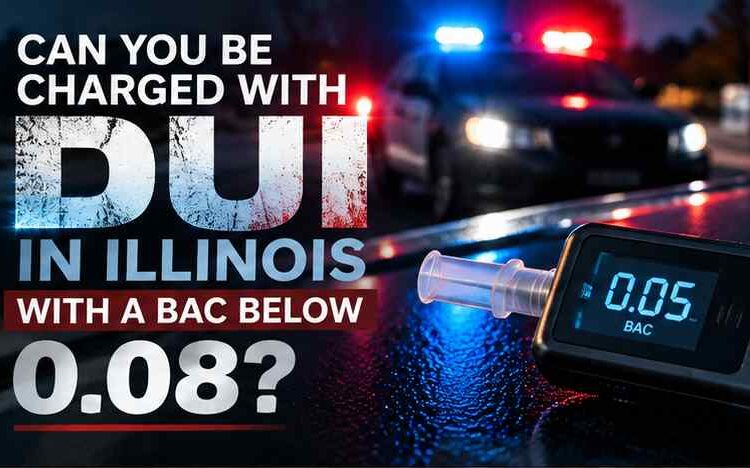
Many Illinois drivers believe they cannot be arrested for driving under the influence if their breath-alcohol concentration (BrAC) is below 0.08. Unfortunately, this common misunderstanding can lead to unexpected criminal charges, even when a breath test shows a result below the legal limit. Illinois law allows prosecutors to pursue DUI charges based on evidence of alcohol impairment, regardless of whether a driver’s BAC reaches 0.08.
Police officers in Lake in the Hills, Crystal Lake, Algonquin, Huntley and throughout McHenry County may rely on driving behavior, roadside field sobriety tests, physical observations, and other evidence when making an arrest. However, a low BAC reading can also provide important evidence for challenging the prosecution’s allegations. At Franks & Kelly, P.C., Attorneys at Law, we help clients throughout McHenry County, Lake County, and Kane County understand their rights, evaluate the evidence against them, and develop effective defense strategies when facing Illinois DUI charges.
Understanding Illinois DUI Laws And The 0.08 BAC Limit
Under 625 ILCS 5/11-501(a)(1), Illinois prohibits driving or being in actual physical control of a vehicle with an alcohol concentration of 0.08 or higher. However, the statute also establishes a separate basis for prosecution under 625 ILCS 5/11-501(a)(2), which prohibits driving while under the influence of alcohol.
This distinction is important because prosecutors do not necessarily need a BAC reading of 0.08 to pursue an impairment-based DUI charge. Instead, they may attempt to establish that alcohol affected the driver’s ability to think and act with ordinary care while operating a vehicle.
We carefully examine which statutory provision supports the allegations and whether the available evidence satisfies the prosecution’s burden of proof. A BAC below 0.08 may weaken certain allegations, but it does not automatically require dismissal.
How Illinois Law Treats BAC Readings Below 0.08
Illinois provides specific evidentiary presumptions based on breath-alcohol concentrations under 625 ILCS 5/11-501.2(b). These rules can significantly affect how prosecutors present their cases and how defense attorneys challenge the allegations.
| BAC reading | Illinois legal presumption |
| 0.05 or less | Presumed not under the influence of alcohol |
| Above 0.05 but below 0.08 | No presumption of impairment or non-impairment |
| 0.08 or higher | Presumed under the influence of alcohol |
A reading between 0.05 and 0.08 does not independently establish impairment. Prosecutors must rely on additional evidence to prove the charge. Even a reading of 0.05 or less does not absolutely prevent prosecution because the statute permits other relevant evidence concerning impairment.
We examine how these presumptions apply to each client’s circumstances and whether the evidence supports a reasonable challenge to the allegations.
Police Observations And Standardized Field Sobriety Testing
When a driver registers a BAC below 0.08, prosecutors may place greater emphasis on the arresting officer’s observations. Police reports may describe swerving, delayed responses, bloodshot eyes, slurred speech, or difficulty completing roadside standardized field sobriety tests.
However, these observations do not always establish alcohol impairment. Fatigue, anxiety, medical conditions, poor lighting, uneven pavement, and physical limitations can affect a person’s behavior and performance during roadside field sobriety testing.
We review police reports, the Arresting Officers’ body-worn camera video and audio recordings, dashboard camera footage, and testing procedures to identify inconsistencies or alternative explanations. When an officer’s conclusions are unsupported by reliable evidence, those weaknesses may become important components of the defense.
Challenging Breathalyzer Results And Testing Procedures
Although a BAC result below 0.08 may support the defense, chemical testing evidence still requires careful examination. Breath-testing devices must be properly maintained, and testing procedures must comply with applicable requirements.
Illinois regulates evidentiary chemical testing under 625 ILCS 5/11-501.2 and applicable administrative rules. Problems involving equipment certification, operator qualifications, observation procedures, or record keeping may affect whether particular test results are admissible or reliable.
We investigate the testing process and compare chemical results with the officer’s reported observations. Our goal is to determine whether prosecutors can establish impairment through credible evidence rather than assumptions.
Criminal Penalties For A DUI Conviction Below 0.08
A DUI conviction can carry serious consequences even when the driver’s BAC was below 0.08. Under 625 ILCS 5/11-501(c), a first DUI charge is generally classified as a Class “A” Misdemeanor, unless aggravating circumstances require a different classification.
Under the law in Illinois, a sentence of Court Supervision for this Class “A” Misdemeanor may result in a fine of up to $2,500.00, plus Court assessments. Other sentencing terms and conditions will include a Court-ordered evaluation and treatment requirements, and attending one Victim Impact Panel. A motorist may be required to perform 100 hours of Public Service Work if their breath-alcohol concentration was .16 or greater. A sentence of Court Supervision will not result in the Illinois Secretary of State revoking the motorist’s driver’s license.
A conviction for this Class “A” Misdemeanor usually results in a sentence entailing Conditional Discharge (a conviction, and a form of non-reporting probation), 10 days in jail, with day-for-day credit to apply, or 240 hours of Public Service Work, and a fine of up to $2,500.00, plus Court assessments. Other sentencing terms and conditions will include a Court-ordered evaluation and treatment requirements, and attending one Victim Impact Panel. A conviction for the offense of Driving under the Influence will result in the Illinois Secretary of State revoking the motorist’s driver’s license.
A collateral consequence of a sentence may involve potential employment difficulties.
Certain circumstances, including prior DUI convictions or specified aggravating factors, may result in more serious charges and sentences. We assess the client’s criminal history and arrest circumstances to determine which charges and penalties may apply.
Driver’s License Consequences And Statutory Summary Suspensions
Illinois DUI cases involve separate criminal proceedings and administrative driver’s license consequences. Under 625 ILCS 5/11-501.1, refusing a chemical test can trigger a statutory summary suspension even when no BAC result establishes intoxication.
A breath-alcohol test below 0.08 generally does not trigger an alcohol-based statutory summary suspension by itself, although other qualifying test results or circumstances may create separate consequences. Drivers under 21 also face distinct zero-tolerance provisions.
Under 625 ILCS 5/2-118.1, qualifying drivers may petition to challenge statutory summary suspensions. We review the reason for the stop, the motorist’s performance on the Standardized Field Sobriety Tests, basis of the arrest, chemical testing procedures, notices, and applicable deadlines to determine whether administrative relief is available.
Building A Defense Against DUI Charges With A Low BAC
A DUI arrest does not establish guilt, and a BAC below 0.08 can create meaningful questions about the prosecution’s evidence. We investigate whether officers had a lawful basis for the traffic stop, whether field sobriety testing was properly administered, and whether the chemical test results support the allegations.
We also examine whether medical conditions, fatigue, or other circumstances offer reasonable explanations for the driver’s behavior. When prosecutors cannot establish the required elements of the offense beyond a reasonable doubt, we pursue appropriate motions, negotiate when advantageous, and prepare for Trial when necessary. Our focus remains on protecting our clients’ rights while helping them understand their options and make informed decisions throughout the legal process.
Frequently Asked Questions About Illinois DUI Charges With A BAC Below 0.08
Can You Be Arrested For DUI In Illinois With A BAC Of 0.07?
Yes. Under 625 ILCS 5/11-501(a)(2), police may arrest someone for suspected alcohol impairment even when their BAC is below 0.08. A reading of 0.07 does not establish a presumption of impairment under Illinois law, but it also does not prevent prosecutors from pursuing charges.
We examine whether the officer had probable cause for the arrest and whether additional evidence supports the allegations. Driving behavior, officer observations, and standardized field sobriety testing may become important factors, particularly when chemical results fall below the statutory limit.
What Happens If Your BAC Is 0.05 Or Lower?
Under 625 ILCS 5/11-501.2(b)(1), a BAC of 0.05 or less creates a statutory presumption that the driver was not under the influence of alcohol. This presumption can provide valuable support when challenging an impairment-based DUI charge.
However, Illinois law permits prosecutors to introduce other relevant evidence concerning impairment. We evaluate the entire investigation to determine whether the prosecution has sufficient evidence to overcome the statutory presumption. A favorable BAC reading can strengthen the defense, but it does not automatically guarantee dismissal.
Can You Be Found “Guilty” Of DUI Without The Prosecutor Having Evidence of a BAC of .08 or Higher?
Yes. Prosecutors can pursue impairment-based DUI charges without establishing a BAC of 0.08 or higher. Under 625 ILCS 5/11-501(a)(2), the prosecution may rely on other admissible evidence showing that the defendant was under the influence of alcohol.
We scrutinize the reliability of officer testimony, driving observations, standardized field sobriety testing, and any additional evidence. A finding of “Guilty” requires proof beyond a reasonable doubt, and we work to identify weaknesses that may undermine the prosecution’s interpretation of events.
Will Your Driver’s License Be Suspended If Your BAC Is Below 0.08?
Not necessarily. A chemical test showing an alcohol concentration below 0.08 generally does not trigger an alcohol-based statutory summary suspension. However, refusing a qualifying test, certain drug-related results, or special rules applicable to drivers under 21 may create separate licensing consequences.
How Quickly Should You Contact An Attorney After A Low BAC DUI Arrest?
We recommend obtaining legal guidance as soon as possible after an arrest. Early legal review allows us to identify evidence that may need preservation, including police recordings, chemical testing records, and witness information.
Illinois law also establishes specific deadlines for challenging certain driver’s license suspensions. Prompt representation helps ensure those issues receive attention while the criminal case is pending. We work closely with clients to explain the charges, review available defenses, and prepare for upcoming court proceedings.
Contact Franks & Kelly P.C., Attorneys At Law For Illinois DUI Defense
A DUI charge can affect your driving privileges, employment, finances, and future, even when your breath-alcohol concentration was below 0.08. Illinois prosecutors may rely on officer observations and roadside testing to pursue impairment-based charges, but that evidence deserves careful legal examination. We believe clients should understand the allegations against them, the potential consequences, and the defense strategies available before making important decisions about their cases.
At Franks & Kelly P.C., Attorneys at Law, we provide criminal defense representation to individuals facing DUI charges and other serious legal matters. Our Attorneys work closely with clients to examine police procedures, challenge questionable evidence, and explain their legal options. We understand that every case involves different circumstances, and we develop strategies based on the evidence and the client’s individual needs.
David Franks has received Super Lawyers recognition in Criminal Defense since 2023, is rated “AV Preeminent” by Martindale-Hubbell, and has achieved a 10.0 Avvo rating. We bring that same commitment to preparation, communication, and individualized representation to clients facing DUI allegations throughout northeastern Illinois.
Call the Lake In The Hills DUI lawyers at Franks & Kelly, P.C., Attorneys at Law, at 847-854-7700 to schedule a confidential consultation. We can review the circumstances of your DUI arrest, discuss the significance of your BAC results, and explain the legal options available to protect your rights and future.