
How Prescription Medication Can Lead To A DUI Charge In Illinois
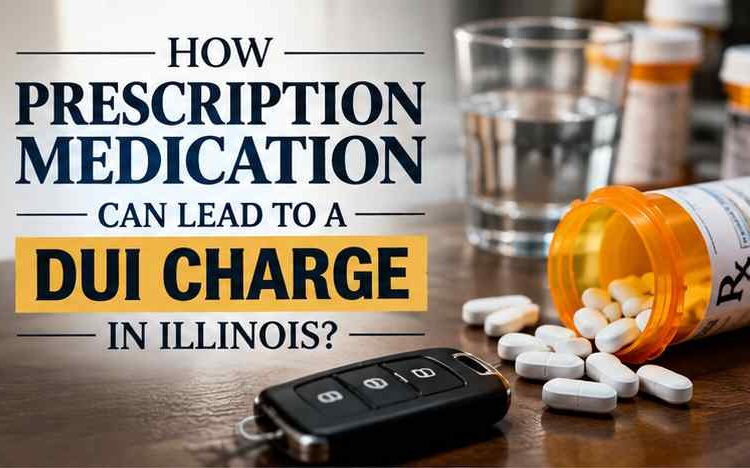
Many drivers in Lake in the Hills, Algonquin, Crystal Lake, Cary and Huntley are surprised to find out that taking prescription medication can result in a DUI arrest. Medications like painkillers, anxiety drugs, sleep aids, and muscle relaxants can slow reaction time, affect concentration, and impact coordination, even when used as prescribed. Police do not need proof of alcohol use to charge someone with DUI.
If medication affects your ability to drive safely, you could face criminal charges. These cases often involve complex questions about side effects, police observations, chemical tests, and whether the driver was truly impaired. At Franks & Kelly, P.C., we help clients in McHenry, Lake, and Kane Counties understand DUI laws, review the evidence, and make informed choices about their defense.
Illinois Laws Governing Prescription Medication DUI Charges
Under the Illinois Vehicle Code, 625 ILCS 5/11-501(a)(4), drivers cannot operate or remain in actual physical control of a vehicle while under the influence of drugs to a degree that makes them incapable of driving safely. This provision applies to prescription medications, including drugs that were lawfully obtained and taken according to medical instructions.
Additionally, 625 ILCS 5/11-501(a)(5) prohibits driving when the combined influence of alcohol, drugs, or intoxicating compounds makes someone incapable of driving safely. Even relatively small amounts of alcohol may become relevant when combined with medications that affect alertness or coordination.
Importantly, 625 ILCS 5/11-501(b) establishes that lawful entitlement to use a medication is not, by itself, a defense to a DUI charge. However, prosecutors must still prove the elements of the charged offense. We examine whether the evidence demonstrates actual impairment rather than simply establishing that a driver had taken prescription medication.
Prescription Medications Commonly Associated With DUI Arrests
Some medications can make driving unsafe by causing drowsiness, dizziness, slower reactions, or trouble focusing. Prescription opioids, benzodiazepines, sleep aids, and certain muscle relaxants are often linked to these issues. Other medications might cause side effects that look like signs of intoxication to police officers.
The effects of medication can differ significantly based on the dose, your personal tolerance, your health, and if you take more than one prescription. Someone who has been on a medication for a long time may react differently than someone taking it for the first time.
We look at prescription records, dosage instructions, medical details, and what happened during the arrest. These facts help us determine if the prosecution’s view of the driver’s actions is backed by solid evidence.
How Police Investigate Suspected Prescription Drug Impairment
A DUI investigation for prescription medication usually starts with a traffic stop for things like disregarding a traffic control device, swerving, speed changes, or lane violations. Officers then watch for signs like slurred speech, trouble following instructions, poor coordination, pupil size, or slow responses.
Police may administer standardized field sobriety tests or request assistance from an officer trained in drug recognition procedures (an Officer trained in ARIDE–Advanced Roadside Impaired Driving Enforcement, or an Officer trained as a DRE–Drug Recognition Expert). However, these observations are not automatically conclusive evidence of impairment.
Factors such as medical issues, tiredness, anxiety, physical challenges, or even the environment can affect how someone performs on roadside tests. We check police reports, body-worn camera video and audio recordings, and dash cam videos, and how tests were done to see if the evidence really supports the charges.
Blood And Urine Testing In Prescription Medication DUI Cases
Police may request chemical testing when they suspect a driver is impaired by prescription medication. Under 625 ILCS 5/11-501.1, Illinois establishes implied-consent procedures for qualifying DUI arrests and chemical testing involving alcohol, drugs, and intoxicating compounds.
Blood or urine testing may identify medications in a person’s system. However, detecting a medication does not necessarily establish that the person was incapable of driving safely at the time of the alleged offense.
We examine laboratory reports, sample collection procedures, testing methods, and the time between driving and specimen collection. Depending on the medication and circumstances, additional medical or scientific evidence may be necessary to evaluate the prosecution’s conclusions.
Criminal Penalties For Prescription Medication DUI Convictions
Under 625 ILCS 5/11-501(c), a first DUI conviction is generally classified as a Class “A” Misdemeanor unless aggravating circumstances apply. Pursuant to 730 ILCS 5/5-4.5-55, a Class “A” Misdemeanor may carry a jail sentence of less than one year and fines of up to $2,500, subject to other applicable statutory requirements.
Additional terms and conditions of a sentence may include probation, attendance at one Victim Impact Panel, and a substance abuse evaluation and Court-ordered treatment. Upon conviction the Illinois Secretary of State will impose the collateral consequence of revoking the motorist’s driver’s license. Repeat offenses and certain aggravating circumstances can result in substantially more serious charges and penalties, including Felony prosecution.
We review the specific charges, prior criminal history, and applicable sentencing provisions to help clients understand the potential consequences and available legal options.
Driver’s License Suspension Following A Prescription Drug DUI Arrest
Prescription medication DUI cases can also involve administrative driver’s license consequences separate from criminal prosecution. Under 625 ILCS 5/11-501.1 and 625 ILCS 5/6-208.1, refusing qualifying chemical testing or receiving certain statutorily specified test results may trigger a statutory summary suspension.
For a first offender, a test refusal results in a 12-month suspension, while certain qualifying positive test results generally result in a six-month suspension. However, detecting legally prescribed medication does not automatically trigger a statutory summary suspension.
We examine the arrest procedure, testing circumstances, and applicable statutory requirements to determine whether a suspension can be challenged.
Building A Defense Against Prescription Medication DUI Charges
A successful defense requires careful examination of the prosecution’s evidence and the circumstances surrounding the traffic stop. We investigate whether officers had a lawful basis for the stop, whether roadside testing was properly conducted, whether or not an ARIDE-trained Officer (Advanced Roadside Impaired Driving Enforcement), or an Officer trained as a Drug Recognition Expert (DRE), were dispatched to the scene to conduct a drug-specific DUI investigation, and whether the chemical evidence establishes the required elements of the offense.
We also examine medical explanations for symptoms that officers may have incorrectly attributed to impairment. When appropriate, we challenge unreliable evidence, seek suppression of unlawfully obtained evidence, and evaluate whether prosecutors can prove their allegations beyond a reasonable doubt. Our goal is to help clients understand their legal options while developing a defense based on the facts and applicable Illinois law.
Frequently Asked Questions About Prescription Medication DUI Charges In Illinois
Can You Get A DUI In Illinois For Taking Medication Prescribed By Your Doctor?
Yes. Under 625 ILCS 5/11-501(a)(4), a person can be charged with DUI when prescription medication impairs their ability to drive safely. Having a valid prescription does not automatically protect someone from prosecution.
However, the prosecution must still establish the required elements of the charged offense. We examine the medication involved, the driver’s behavior, and the evidence collected during the investigation. In some cases, the evidence may show that the driver was taking medication legally without demonstrating the level of impairment, beyond a reasonable doubt, required for a finding of “Guilty.”
Does Having Prescription Medication In Your System Automatically Mean You Are Guilty Of DUI?
No. The presence of prescription medication in blood or urine does not automatically establish guilt under Illinois’ impairment-based DUI provisions. Prosecutors must establish that the medication affected the driver’s ability to operate a vehicle safely.
We review the chemical testing results alongside other evidence, including police observations, driving behavior, medical records, and the timing of medication use. These details can help distinguish actual impairment from the mere presence of a substance. Different statutory provisions apply when unlawful controlled substance use is alleged.
Can Police Arrest You For Prescription Drug DUI Without A Failed Breathalyzer Test?
Yes. Breathalyzer testing primarily measures alcohol concentration and does not identify prescription medications. Police may investigate drug impairment when they observe driving behavior or physical symptoms they believe are associated with medication use.
However, officers must have legally sufficient grounds for an arrest, and prosecutors must establish the elements of the criminal charge. We review the traffic stop, roadside investigation, and any chemical testing to determine whether the allegations are supported by admissible evidence.
Contact Franks & Kelly P.C., Attorneys At Law, About Prescription Medication DUI Charges
A prescription medication DUI arrest can create serious concerns about your driving privileges, employment, criminal record, and future. Even when you were taking medication according to your doctor’s instructions, Illinois prosecutors may pursue criminal charges if they believe your ability to drive safely was impaired. Understanding the evidence and the legal requirements is essential before making decisions about your case.
At Franks & Kelly P.C., Attorneys at Law, we represent clients facing DUI charges and other legal matters throughout McHenry County and the surrounding communities. From our office in Lake in the Hills, Illinois, we work closely with clients to explain their rights, examine the evidence, and identify appropriate legal strategies. We also regularly assist individuals throughout Lake County and Kane County.
David Franks has received Super Lawyers recognition in Criminal Defense since 2023, is rated “AV Preeminent” by Martindale-Hubbell, and has achieved a 10.0 Avvo rating. Our commitment to “Providing Tailored Legal Services For Complex Legal Matters” reflects our approach to understanding each client’s circumstances and providing practical, individualized legal guidance.
We recognize that every DUI case presents different legal and factual questions. We take the time to review the circumstances of the arrest, discuss potential consequences, and explain the available options so clients can make informed decisions throughout the legal process.
Call the Lake In The Hills DUI attorneys at Franks & Kelly, P.C., Attorneys at Law, at 847-854-7700 to schedule a confidential consultation. With our office located in Lake in the Hills, we represent clients throughout McHenry County, including Crystal Lake, Algonquin, Cary, Huntley, McHenry, and Woodstock, as well as communities throughout Lake County and Kane County, Illinois. We can review your prescription medication DUI allegations, discuss your legal rights, and help you determine the appropriate next steps.