
Drug Possession Vs. Drug Trafficking Charges In Illinois
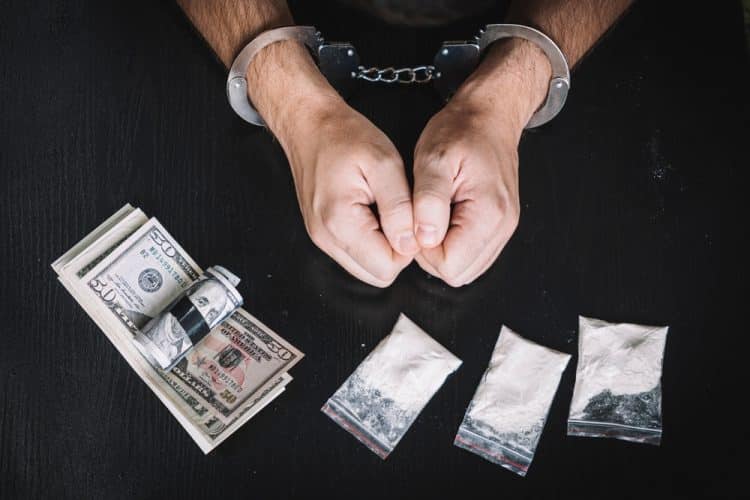
Drug charges in Illinois can carry serious consequences, but not every drug case is charged or prosecuted the same way. A person accused of possessing a small amount for personal use may face a very different case than someone accused of bringing drugs into Illinois or possessing drugs with intent to deliver. The difference can affect the charge level, potential penalties, pre-trial release conditions, search issues, plea negotiations, and long-term impact on employment, housing, education, professional licensing, and immigration status. We regularly work with clients in McHenry County, Lake County, and Kane County who need to understand what prosecutors must prove and what defenses may apply. At Franks & Kelly, P.C., Attorneys at Law, we help clients better understand their legal options so they can make informed decisions throughout the criminal court process.
What Drug Possession Means Under Illinois Law
Drug possession generally means the State alleges that a person knowingly possessed a controlled substance without legal authority. Under 720 ILCS 570/402, the Illinois Controlled Substances Act makes it unlawful to knowingly possess a controlled or counterfeit substance or a controlled substance analog, except as otherwise authorized by law. The statute also provides that a violation involving each controlled substance is treated as a single and separate violation.
Possession can be actual or constructive. Actual possession may involve drugs found on a person, such as in a pocket, purse, backpack, or hand. Constructive possession may be alleged when drugs are found in a place the State claims the person controlled, such as a vehicle, bedroom, apartment, or shared storage area. Constructive possession often creates factual disputes because proximity alone does not always prove knowing control.
The penalties for possession depend on the type of substance, amount, prior record, and other facts. A case involving cocaine, heroin, fentanyl, methamphetamine, prescription medication, or another controlled substance may be treated differently than unlawful possession of cannabis charges under Illinois law. Cannabis cases may involve separate rules under the Cannabis Control Act and the Cannabis Regulation and Tax Act, depending on the amount, the person’s age, and whether the conduct was legally authorized. Illinois law still prohibits unauthorized possession of cannabis plants except as otherwise permitted by law.
What Drug Trafficking Means Under Illinois Law
Drug trafficking is more serious than simple possession because it involves an allegation that drugs were brought into Illinois for delivery or manufacture. Under 720 ILCS 570/401.1, Illinois law addresses controlled substance trafficking and provides enhanced penalties when a person knowingly brings or causes to be brought into Illinois a controlled substance for the purpose of manufacture or delivery. This type of charge often involves allegations of interstate transportation, larger quantities, packaging, communication records, money, informants, surveillance, or coordinated law enforcement activity.
Illinois also has separate provisions for manufacture, delivery, and possession with intent to manufacture or deliver. Under 720 ILCS 570/401, it is unlawful, except as authorized by the Act, to knowingly manufacture or deliver, or possess with intent to manufacture or deliver, a controlled substance, counterfeit substance, or controlled substance analog. This means a person can face a serious felony even if the State does not claim the person actually sold drugs, so long as prosecutors allege possession with intent to deliver.
The word “trafficking” is sometimes used loosely by police, prosecutors, or the public. In legal terms, however, Illinois law distinguishes possession, delivery, possession with intent to deliver, and trafficking. The exact charge matters because the required proof and sentencing exposure can differ substantially.
How Prosecutors Try To Prove Intent To Deliver
In many cases, the fight is not only about whether drugs were present. The fight is whether the State can prove intent to deliver. Prosecutors may point to the amount of drugs, separate packaging, scales, baggies, cash, text messages, social media messages, multiple phones, alleged customer lists, firearms, or statements made during questioning. They may also rely on officer testimony about what they believe is consistent with distribution rather than personal use.
We look carefully at these claims because the presence of certain items does not automatically prove intent to deliver. Cash can have lawful explanations. Packaging may be unrelated to distribution. A person may share a residence or vehicle with others. Digital messages may be taken out of context. A larger quantity may raise questions, but the State still must prove every legal element beyond a reasonable doubt.
Search and seizure issues are also central in drug cases. A traffic stop, vehicle search, home search, warrant, consent search, K-9 sniff, probation search, or arrest search may raise constitutional questions. If evidence was obtained unlawfully, a motion to suppress may become an important part of the defense strategy.
Why The Difference Between Possession And Trafficking Matters
The difference between possession and trafficking can change the entire case. Possession charges may still be serious, but trafficking and delivery-related charges often carry greater felony exposure, more aggressive prosecution, and more pressure during negotiations. A trafficking allegation may also affect pretrial release conditions, asset issues, and how the prosecution views the case.
The difference can also affect a person’s future. A drug conviction may create barriers to employment, housing, education, financial aid, professional licensing, immigration status, and child custody or parenting matters. For clients in Lake in the Hills and throughout McHenry County, Lake County, and Kane County, we understand that a criminal case is not only about what happens in court. It is also about protecting the client’s record, reputation, family, and future opportunities.
Potential Defenses In Illinois Drug Cases
Every drug case depends on the facts, but several defense issues commonly arise. The State must prove knowledge, possession, identity, chain of custody, substance testing, weight, and the required intent for the charged offense. If drugs were found in a shared home or shared vehicle, the question may be whether the accused person actually knew about and controlled the substance. If the police relied on a search, the question may be whether the search was lawful. If the State claims intent to deliver, the question may be whether the evidence proves more than suspicion.
We also review whether statements were obtained in violation of constitutional rights, whether lab testing supports the charge, whether the alleged drug weight was properly calculated, and whether the prosecution can connect the accused person to the specific substance. In some cases, treatment-based outcomes, reduced charges, conditional discharge, probation, and diversion may be possible. In other cases, the best approach may be to challenge the evidence directly.
Why Early Legal Help Matters
A drug arrest can move quickly. Early legal help allows us to review the charging documents, police reports, body camera footage, search issues, lab evidence, witness statements, and any digital evidence the State may try to use. It also allows us to discuss the client’s personal goals, criminal history, immigration concerns, employment concerns, and family responsibilities before major decisions are made.
At Franks & Kelly, P.C., Attorneys at Law, we work closely with clients to explain the difference between possession, possession with intent to deliver, and trafficking charges under Illinois law. Our goal is to help clients understand the accusation, the available defenses, the risks, and the possible paths forward.
FAQs About Drug Possession Vs. Drug Trafficking Charges In Illinois
What Is The Main Difference Between Drug Possession And Drug Trafficking In Illinois?
The main difference is the type of conduct the State claims occurred. Drug possession generally means the State alleges that a person knowingly possessed a controlled substance without legal authority under 720 ILCS 570/402. Drug trafficking generally involves an allegation that a person knowingly brought or caused drugs to be brought into Illinois for manufacture or delivery under 720 ILCS 570/401.1.
A possession case may involve drugs found on a person, in a car, or in a residence. A trafficking case usually involves a more serious allegation connected to transportation, delivery, or larger-scale distribution. The difference matters because trafficking and delivery-related charges can carry greater penalties and more severe long-term consequences.
Can I Be Charged With Intent To Deliver Even If I Did Not Sell Drugs?
Yes. Illinois law allows prosecutors to charge possession with intent to deliver even when there is no completed sale. Under 720 ILCS 570/401, the State may charge a person with possessing a controlled substance with intent to manufacture or deliver. Prosecutors may argue intent based on circumstantial evidence, such as quantity, packaging, scales, cash, messages, or other facts.
However, an allegation is not proof. The State must prove intent beyond a reasonable doubt. We examine whether the facts truly support delivery or whether the evidence is consistent with personal use, shared access, weak police assumptions, or an unlawful search.
Does The Amount Of Drugs Determine Whether The Charge Is Possession Or Trafficking?
The amount of drugs is important, but it is not the only factor. A larger amount may lead prosecutors to argue intent to deliver or trafficking, while a smaller amount may be more consistent with possession. However, Illinois drug charges also depend on the type of substance, how it was packaged, where it was found, whether there was evidence of sales, and whether the State claims the drugs crossed into Illinois for delivery or manufacture.
We review the entire case instead of relying on quantity alone. A drug weight calculation may also need to be challenged if packaging, mixtures, testing procedures, or lab reports create questions.
What If The Drugs Were Found In A Car With Multiple People?
When drugs are found in a vehicle with multiple people, the State still must prove who knowingly possessed the drugs. Being near drugs does not automatically mean a person had knowing control over them. Prosecutors may look at where the drugs were found, who owned or drove the vehicle, whether anyone made statements, whether fingerprints or DNA exist, and whether other evidence connects the accused person to the drugs.
These cases often involve constructive possession issues. We look closely at whether the State can prove more than mere presence in the vehicle. Shared access can create reasonable doubt, especially when the evidence does not clearly show who knew about or controlled the substance.
Can A Drug Charge Be Reduced From Trafficking Or Intent To Deliver To Possession?
In some cases, yes. Whether a reduction is possible depends on the evidence, the charge, the defendant’s history, the prosecutor’s position, and the defense issues in the case. If the evidence of delivery or trafficking is weak, the defense may be able to argue for a reduction, dismissal of certain counts, or a more favorable resolution.
A reduction may make a major difference in sentencing exposure and long-term consequences. We evaluate search issues, proof of intent, drug weight, lab testing, chain of custody, and witness credibility to determine whether the State can support the more serious charge.
What Are Common Defenses To Illinois Drug Possession Charges?
Common defenses include lack of knowledge, lack of possession, unlawful search, unlawful stop, improper seizure, unreliable statements, weak chain-of-custody, lab testing problems, and failure to prove the substance or weight charged. If drugs were found in a shared space, the defense may focus on whether the State can prove the accused person actually controlled the substance.
Every defense depends on the facts. We review the police conduct, body camera footage, reports, search basis, witness statements, and forensic evidence. The defense strategy should be built around the specific weaknesses in the prosecution’s case.
What Are Common Defenses To Drug Trafficking Or Intent To Deliver Charges?
Common defenses include challenging whether the State can prove intent to deliver, whether the accused person knew about the drugs, whether the search was lawful, whether the drug weight was accurate, and whether the alleged transportation into Illinois was proven. In trafficking cases, the State must connect the accused person to conduct that meets the statutory elements, not merely suggest involvement through suspicion.
Intent cases often depend on circumstantial evidence. We may challenge assumptions about cash, phones, packaging, messages, or the meaning of items found during a search. The goal is to test whether the State has evidence strong enough to meet its burden.
Should I Talk To Police If I Am Accused Of Drug Possession Or Trafficking?
No. You should not speak with police after a drug accusation. Statements made during a stop, search, or interrogation may be used by prosecutors. Even comments that seem harmless can affect issues such as knowledge, possession, ownership, intent, or connection to a vehicle or residence.
A person accused of a drug offense has constitutional rights. Before answering questions about drugs, money, phones, travel, other people, or where items were found, it is wise to speak with a criminal defense attorney. Early legal guidance can help protect the case from avoidable mistakes.
Contact Our Drug Crime Defense Attorneys To Schedule A Consultation
If you or someone you care about is facing a drug possession, possession with intent to deliver, or drug trafficking charge in Illinois, David Franks of Franks & Kelly, P.C., Attorneys at Law, can help you understand your rights and options. Our law office is located in Lake in the Hills, with a primary focus on McHenry County. We also serve clients throughout Lake County and Kane County.
Our attorneys work closely with clients to help them make informed decisions throughout the legal process. We are known locally for providing tailored legal services for complex legal matters. David Franks of Franks & Kelly, P.C., Attorneys at Law, has been recognized by his peers as a “Super Lawyer” in criminal defense since 2023, has been recognized by Martindale-Hubbell with an “AV-Preeminent” peer review rating, and has earned a perfect 10.0 Avvo rating. Call the Lake in the Hill drug crime attorneys at Franks & Kelly, P.C., Attorneys at Law, by calling 847-854-7700 to schedule a confidential consultation.